


-
The Toddler Program, for children ages 24-36mo is designed to assist the child in taking important steps into a nurturing, supportive and stimulating school environment. Children develop independence and respect for others, as well as acquire sensory, motor, practical life, language, pre-reading and -math skills.
-
In our Dual-Language Primary program students work cooperatively and independently in the prepared environment. Our traditional Montessori curriculum includes language skills, mathematics, reading and writing, geography, science, and culture. Beyond these focus areas, children are encouraged to become increasingly independent and active participants in the learning process.
-
Our Dual Language Lower Elementary program is a 1st-3rd grade model Montessori classroom spread across classrooms, labs, libraries and studios. Here, our children continue developing their voices, their leadership traits, their comfort with group dynamics and hone problem solving skills.
-
In our Upper Elementary classroom (4th-6th grades), content is not presented in “course subject” form; instead, ideas and concepts are explored across the breadth and to the depth demanded by the child. Social development takes on a more prominent development at this age. Individual morals and values are further established, particularly within the framework of peers. The sense of self is expanded beyond personal experience. Abstract experiencing through literature, arts, etc. further develops and can modify the child’s sense of self. Decision-making skills and problem-solving skills are self-tested, and success is qualified as learning from both the positive and negative experiences of life.
-
The Middle School Program blends our dynamic Montessori curriculum into the IB Middle Years Program (IB MYP) in service of students who are in a crucial period of personal, social, physical and intellectual development. During this time of uncertainty and of questioning their place in the world, the melding of the Montessori philosophy with the discipline of the IB MYP is designed to nurture their curiosity and eagerness to learn, identify the gifts that make them unique and help them to find a sense of belonging in the ever changing, increasingly complex and interrelated world around them.
Toddlers

“The last few months have been truly amazing, I would have never imagined the independence that could develop so quickly, I was surprised that he was ready to do so much on his own”
- Clément (father to Jasper)
LA PRIMA CASA
Building independence.
The Toddler Program, for children ages 18-36mo is designed to assist the child in taking important first steps away from home into a nurturing, supportive and stimulating school environment. Children develop independence and respect for others, as well as acquire sensory, motor, practical life, language, pre-reading and pre-math skills.
Within the Toddler Room, the toddler-sized furniture, as well as the specially designed Montessori materials for this age group, provide an environment young children can explore with a sense of mastery. Activities are designed to promote self-care, develop gross and fine motor skills, foster increasing concentration and ability to absorb and follow multi-step directions and to develop social skills.
Young students learn to work independently in the classroom, taking materials from the shelves, completing the steps of their work and then returning the materials to the shelves. As they progress through the year, they begin to work collaboratively with friends and teachers.
THE TODDLER TEAM

-
Kim graduated from Queens College with a BA In Sociology focused on the Modern Urban Community. She has been at C'E for the past three years, and has been a trained Montessori teacher and a Lead in the Toddler classroom for the last two. She grew up a star volleyball player for her high school and college and brings lessons, warm-ups and games learned during that experience into our Toddler classroom and Extended Care program. She had previously worked helping children in Corona, Queens as part of a foundation called STACKS run by the New York City Public Libraries to bring more children into the library community through fun after school activities and tutoring programs. She is (proudly) from Queens originally and has lived in and around New York City all of her life, her roots and extended family are from Ecuador. She is C'E's go-to teacher for training new staff in having fun on the playground.

-
Johanna was born and raised in Williamsburg, Brooklyn. She's seen this community change quite a bit which makes one of her goals while at C'E to connect the school with the community she grew up in. She believes we are all one and hopes to honor this oneness - enjoying the ebbs and flows of the Toddler classroom communities that she helps create and guide. She is daughter to two Dominican immigrants, and the first generation of her family born in the US. Growing up, she attended public school in the neighborhood. In the traditional school system she would often imagine and create a dream school in her head, only to find out several years later that her imaginary school is very much like C'E Montessori, a school that she has helped create and grow. Johanna graduated from FIT with a degree in textiles which led her down a path of teaching and Montessori, focused on the tactile, sensorial and fine motor skills work with hands. She earned her AMA Montessori training credentials for Primary in 2021. She has a rabbit, Kumbha and has scored a touchdown at MetLife stadium.

-
Norma has been a foundational part of the C'E Montessori school community since 2017. She was born and raised in our neighborhood before moving to the Lower East Side as an adult to attend Touro College for an Elementary Education degree and start a family. In the classroom she brings a loving, tender family feel to children sometimes experiencing their first time away from home and is a great asset in bridging that gap for the Toddler classroom. She loves to sing and is a talented musician, she does so each week in the classroom and every weekend at her church. Norma is a beloved mainstay of our community and an important support to our staff and children.
Primary

C’E CASA
Building confidence.
Our Casa program for children ages 3 to 6 provides a beautiful, enriching environment where children are invited to grow, explore, and discover in both English and Spanish. With carefully designed minimalist classrooms, each space available to children (garden, studio, kitchen, library, classroom) is intentionally created to foster a calm and engaging atmosphere, allowing the children to focus on their learning and development.
A key feature of our Casa program is the hands-on connection with nature. Our children actively participate in caring for the garden, where they grow organic fruits, vegetables, and herbs. This not only nurtures their sense of responsibility but also provides them with a direct understanding of where their food comes from. The garden becomes an extension of the classroom, offering countless opportunities for children to explore the cycles of nature and experience the joy of planting, tending, and harvesting their own crops. These experiences naturally extend into our focus on organic and local food, with children participating in cooking activities that emphasize healthy eating, cooperation, and appreciation for natural ingredients.
In the Casa Montessori program, independence and community development are at the heart of every activity. Children are encouraged to take responsibility for their actions, choices, and surroundings, fostering a sense of autonomy and confidence. Through collaborative work and shared experiences, children also develop a strong sense of community, learning to respect each other and work together. The teachings of grace and courtesy are integrated into daily life, with children learning to interact with kindness, empathy, and respect for one another. This creates a supportive and harmonious environment where every child feels valued and empowered, allowing them to grow both as individuals and as part of a caring, inclusive community.
“3 years later we still talk all the time about why choosing this for our child has been the best decision we could have made. Bottom line is : C’E has soul!”
Aurelie + Maurice
THE PRIMARY TEAM
-
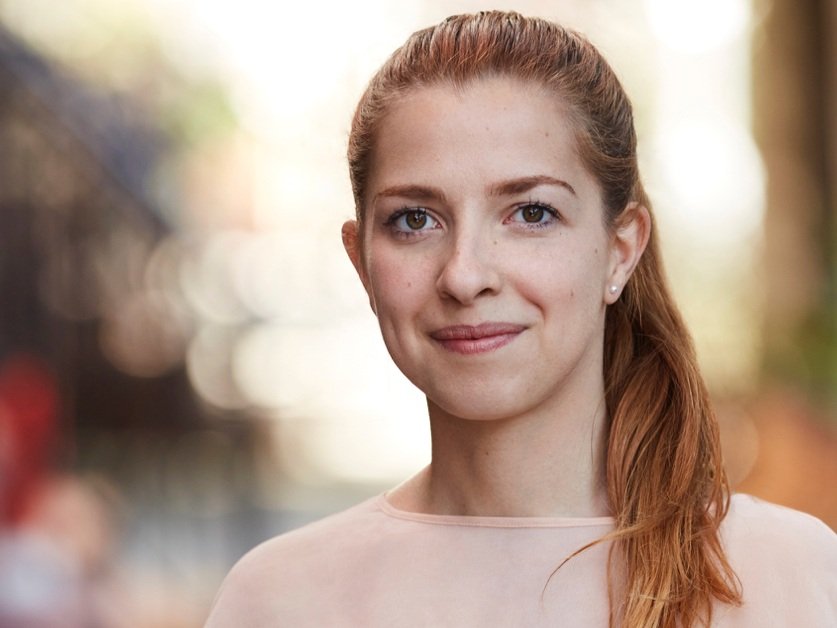
Victoria is from Argentina and first came to C'E Montessori as a visiting teacher for a Spanish immersion experience through music. She is an artist first, a proud graduate from AMDA Integrated Conservatory in NYC after training at the Fundación Julio Bocca in Buenos Aires. She sings, dances and acts through each one of her days at C'E Montessori and outside of school in performances at Teatro Sea, LATEA and Cuchame theatre among others. She has been an important part of school for the past four years, and in 2020 decided to complete her Montessori training and take on a Lead Teacher role in one of our Primary classrooms. Victoria injects artistic flair into everything she does, nap-time included, but most notably plans, designs and runs the C'E Montessori Winter Concert. This yearly December event is the culmination of the fall semester and a great way for children at our school to take on different responsibilities and roles in developing voice and stage presence.

-
Kaylin was born and raised outside of Charlotte, North Carolina where they went to school at UNC-Charlotte and began her teaching and yoga careers. They worked as a Lead teacher and as an Assistant Director of a Reggio Preschool before deciding to pack up and move to New York City. She is a passionate yogi, she is trained to be a yoga teacher and uses that training every day in the Primary classroom. They are AMA-Montessori trained and certified and have been teaching since 2019. Kaylin is at home taking care of the world around her - they are the second oldest of five siblings, has two sweet cats, and 27 houseplants.


-
Ginny arrived at C'E from a small Forest Reggio Preschool in South Brooklyn where she was completely in charge of an outdoor curriculum for a group of 15 preschoolers.
At C'E she has worked as Lead Primary Guide, Curriculum Director for Food and Gardening, and now Director of Early Childhood and our 4 Primary classrooms. She is from North Mass and lived and taught in Seattle before settling into Brooklyn and our school. She loves to cook and garden, she moved to New York City in 2018 together with her four best friends.
Lower Elementary

LOWER ELEMENTARY
Building curiosity.
Our Lower Elementary program includes 1st to 3rd graders. In this classroom, students continue to have free rein to explore based on the 3-hour uninterrupted work cycle. The curriculum becomes broader and the accountability stakes are raised. Children in Montessori Elementary independently design and follow a work plan each day, documenting their own progress with their teacher's support. Children now begin to manage their time, checking off weekly practice work, exploring different paths through the curriculum, and creating impressive projects of their own.
Our Elementary classroom is specifically designed to meet the learning and developmental needs of our children. Math, language, science, geography, history, music and art are all introduced as part of the great breadth and depth of the human experience. Working in small groups with specially created Montessori materials, elementary-aged children develop a deep understanding of fundamental concepts in each of these subject areas. As the child becomes increasingly able to work on an abstract level, reading, writing and math become tools for learning about the world. Above all, the curriculum in the elementary years is designed to capture the imagination of the child and engender a lifelong love of learning.
THE CLASSROOM
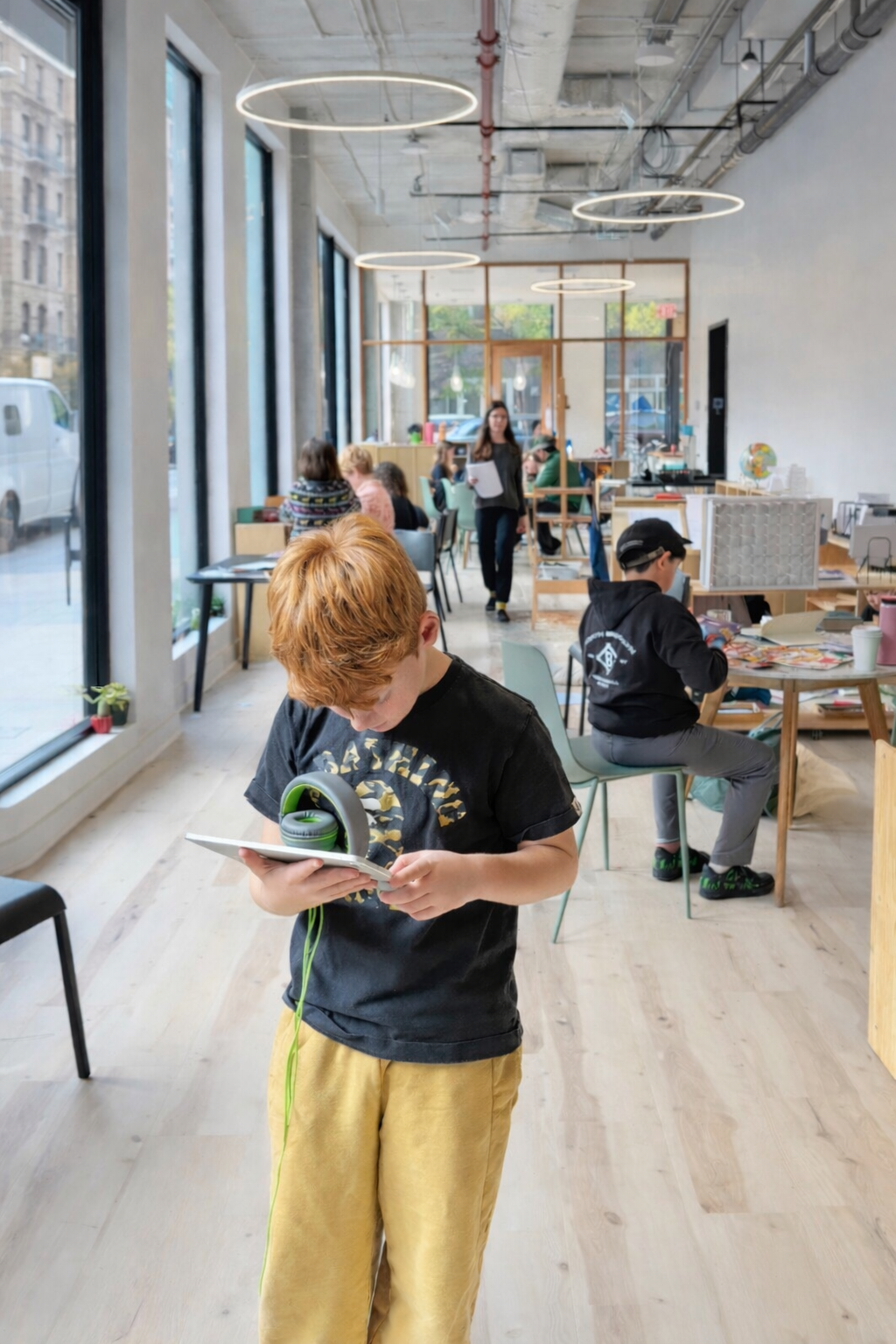
Our Dual Language Elementary program is a 1st-3rd grade model Montessori classroom spread across a giant classroom, along with a separate library, tech lab and studio space.
GREAT LESSONS
The Great Lessons are an important and unique part of the Lower Elementary Montessori curriculum. These lessons are bold, exciting, and are designed to awaken a child's imagination and curiosity. The child should be struck with the wonder of creation, thrilled with new ideas, and awed by the inventiveness and innovation that is part of the human spirit.
The Five Great Lessons are traditionally presented in Lower Elementary, and are presented every year so that children see them more than one time. Each year that the lessons are presented they know more, they excitedly wait for the moments that will impress their new, younger classmates - they begin to own the story of knowledge that we all share.
Unlike the Primary environment, where the child is introduced first to "small" ideas that gradually widen into larger concepts, the elementary child is introduced right away to large concepts - the largest of all being the beginning of the universe. Then they can be shown how all the smaller ideas fit into the larger framework.
OUR ADVISORS
Advisors in the Lower and Upper Elementary programs serve as a critical link between home and school. Each student is paired with an advisor and usually remains with that person for the duration of their time in the program. Advisors maintain a big picture view on their advisee's social, emotional, and academic experience and serve as the first point of contact for families when questions about school arise. During the Elementary cycle, advisors and students form a bond that sets the foundation for learning and growth.
The teaching team embraces their responsibility to educate the whole child as they meet the academic, social, and emotional needs of each of their students. They provide an environment where children are engaged in their education, feel safe to learn, and are able to communicate their needs and feelings with the teaching staff and their peers. The ultimate goal is for students to have the skills they need to be successful when they leave the environment.
SPECIAL EVENTS
The Lower Elementary program is highlighted by special events that frame the school year for its students. These events occur annually and present opportunities for children to put their talents to work at a different scale.
The Arts Festival is a whole community event showcasing the talents of children from the Toddler classroom up into the Elementary. Process over product, the entire collective effort and each piece is celebrated at this beautiful spring event.
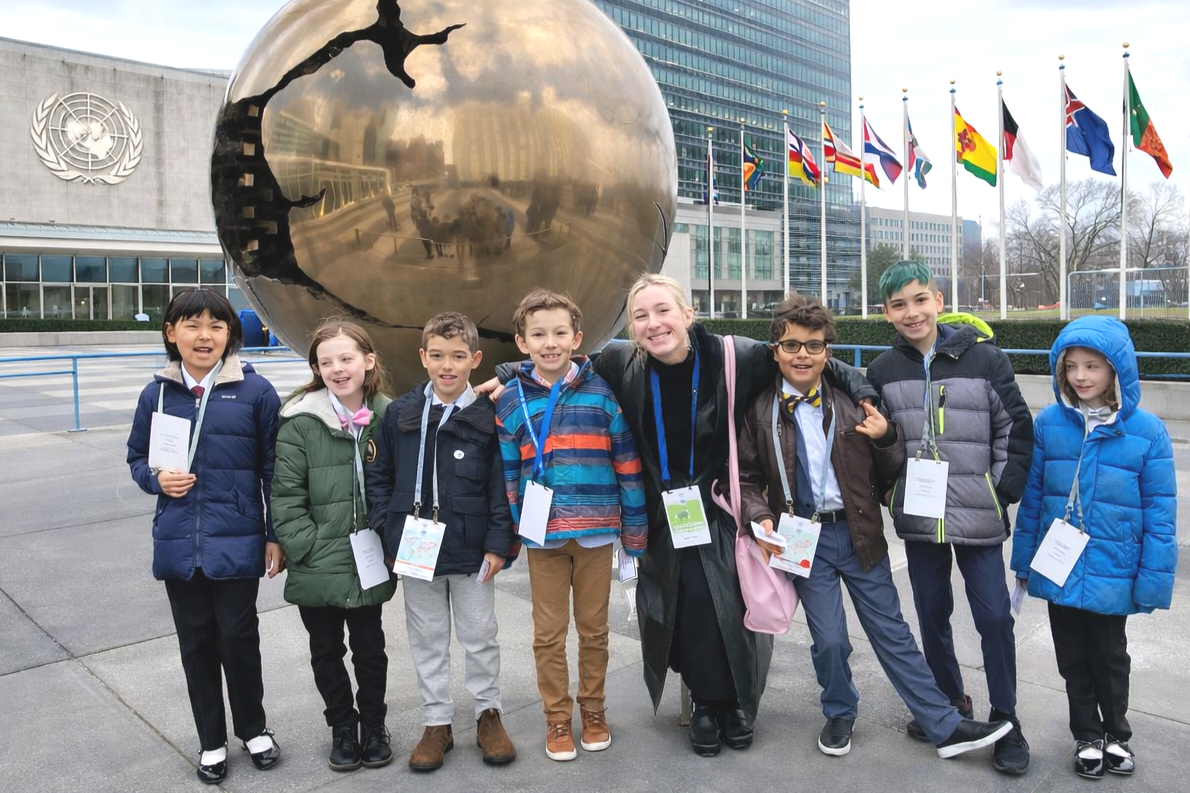
Each year students compete in the Scripps National Spelling Bee where a group of qualifiers is selected at the school-wide bee and continue on to the New York City event.
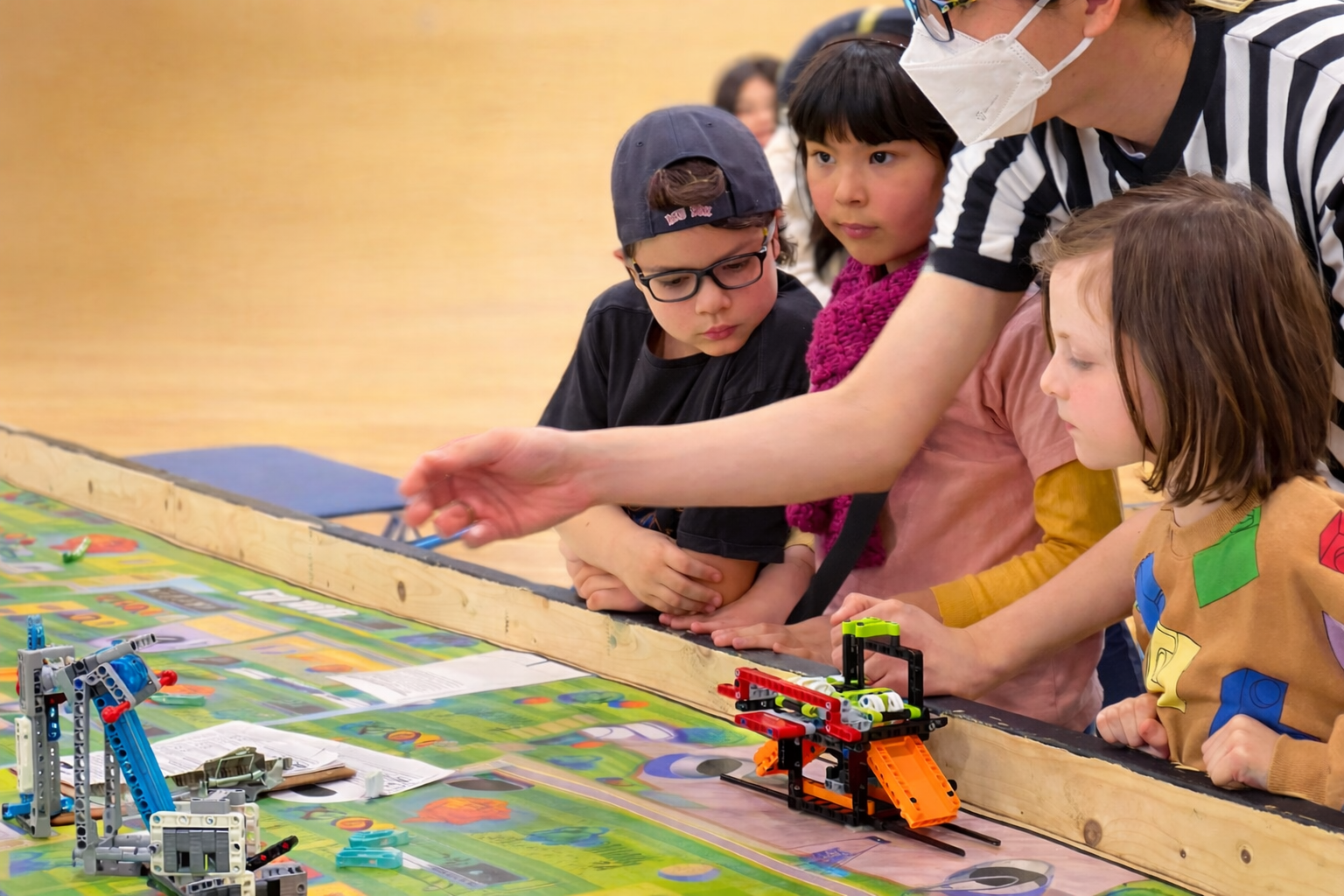
The First Lego League is a coding and robotics competition and celebration where elementary students program lego-based robots to solve problems and accomplish tasks in a makeshift world. The competition is both regional and worldwide - children proudly take their robots to events throughout the city.
At the Winter Concert every child at school participates in the telling of one of Maria Montessori's 'Great Lessons' using their musical skills, instruments, dance, and theatricality.
C'E's Spanish Spring Musical affords elementary program students the chance and venue to perform a musical entirely in Spanish. This yearly celebration and culmination of the Spanish program is led by a team of musicians and choreographers.
LOWER ELEMENTARY TEAM
-
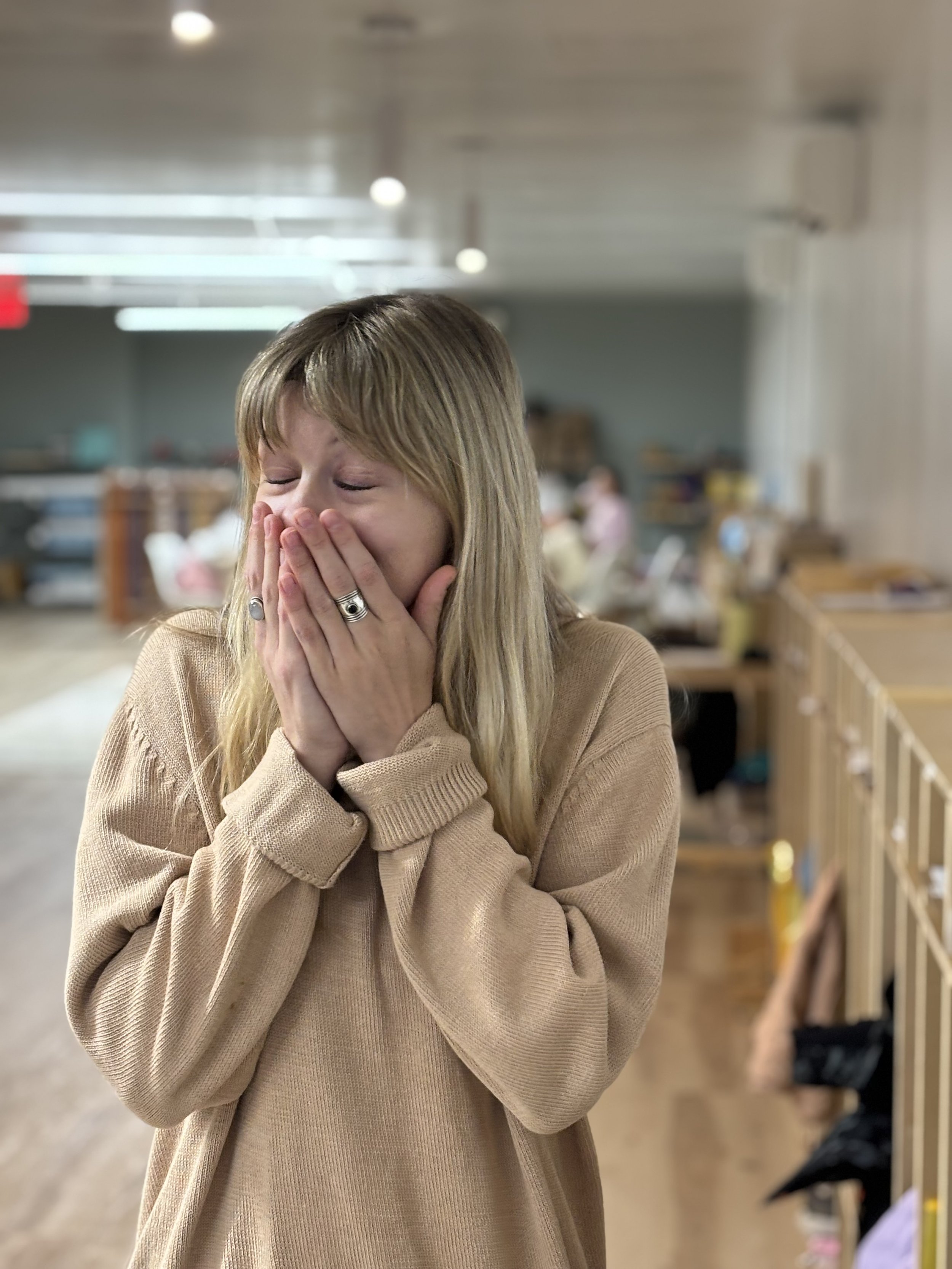
Hannah is a second-year Lead Lower Elementary Guide and Language Development Specialist with a strong background in diverse educational settings. Originally from the Midwest, she began her career as a public school educator before expanding her experience in charter schools after moving to New York City. She now brings this broad perspective to her work as a Montessori guide at C’E, where she is known for her intentional, language-rich classroom environments and commitment to student-centered learning.
Hannah is a thoughtful advocate for our school community. Through her work both in and out of the classroom, she emphasizes inclusive practices, joyful learning, and meaningful connections between students, language, and place.
-
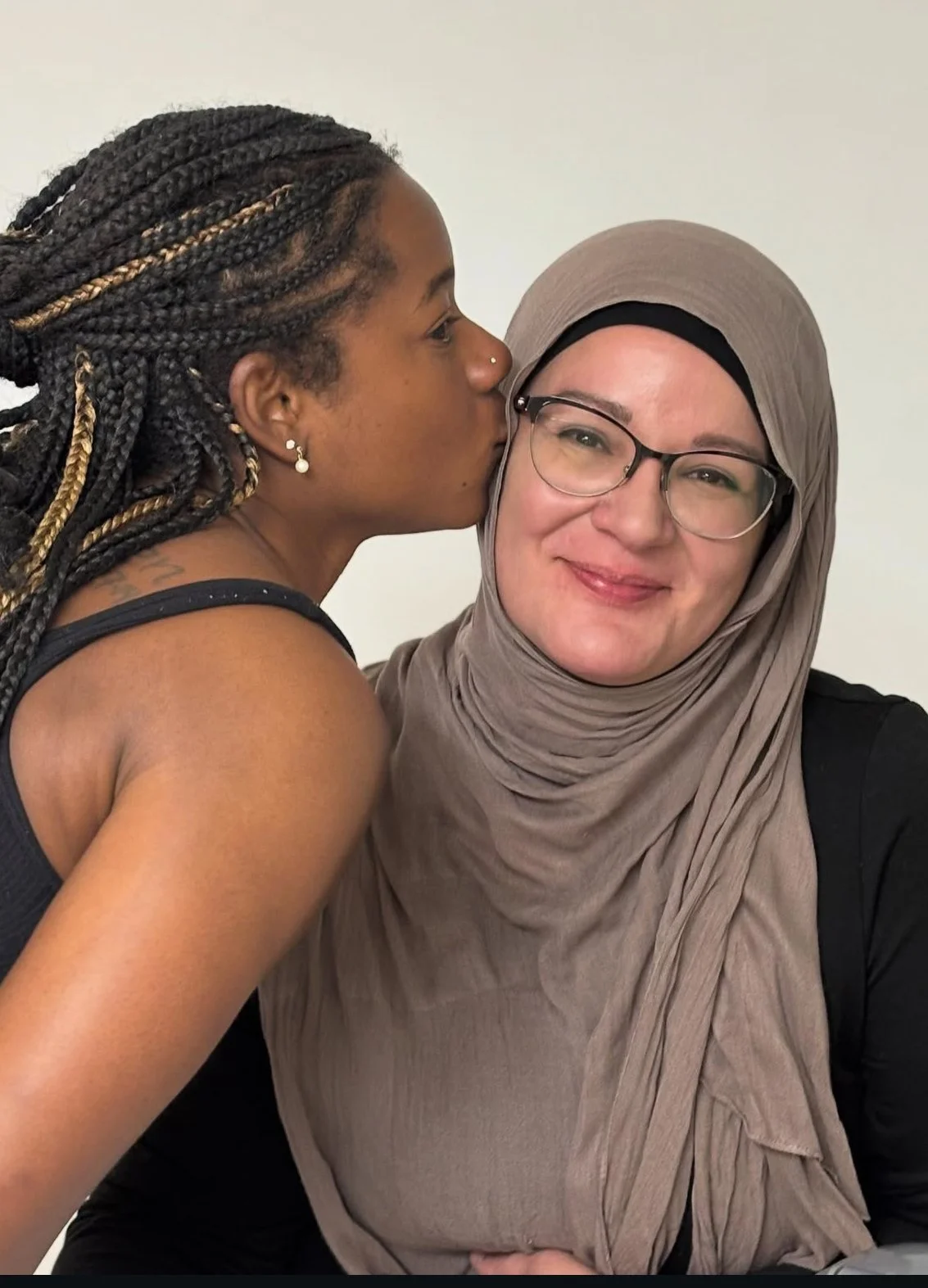
Gina is a 2nd year Lead Lower Elementary Guide and curriculum specialist. She has extensive experience in the Montessori teacher community, working for over a decade in leadership within AMS and at various schools. She is a Montessori teacher trainer for AMS and a researcher and leader in the Montessori movement worldwide.
Upper Elementary

UPPER ELEMENTARY
Building Leadership.
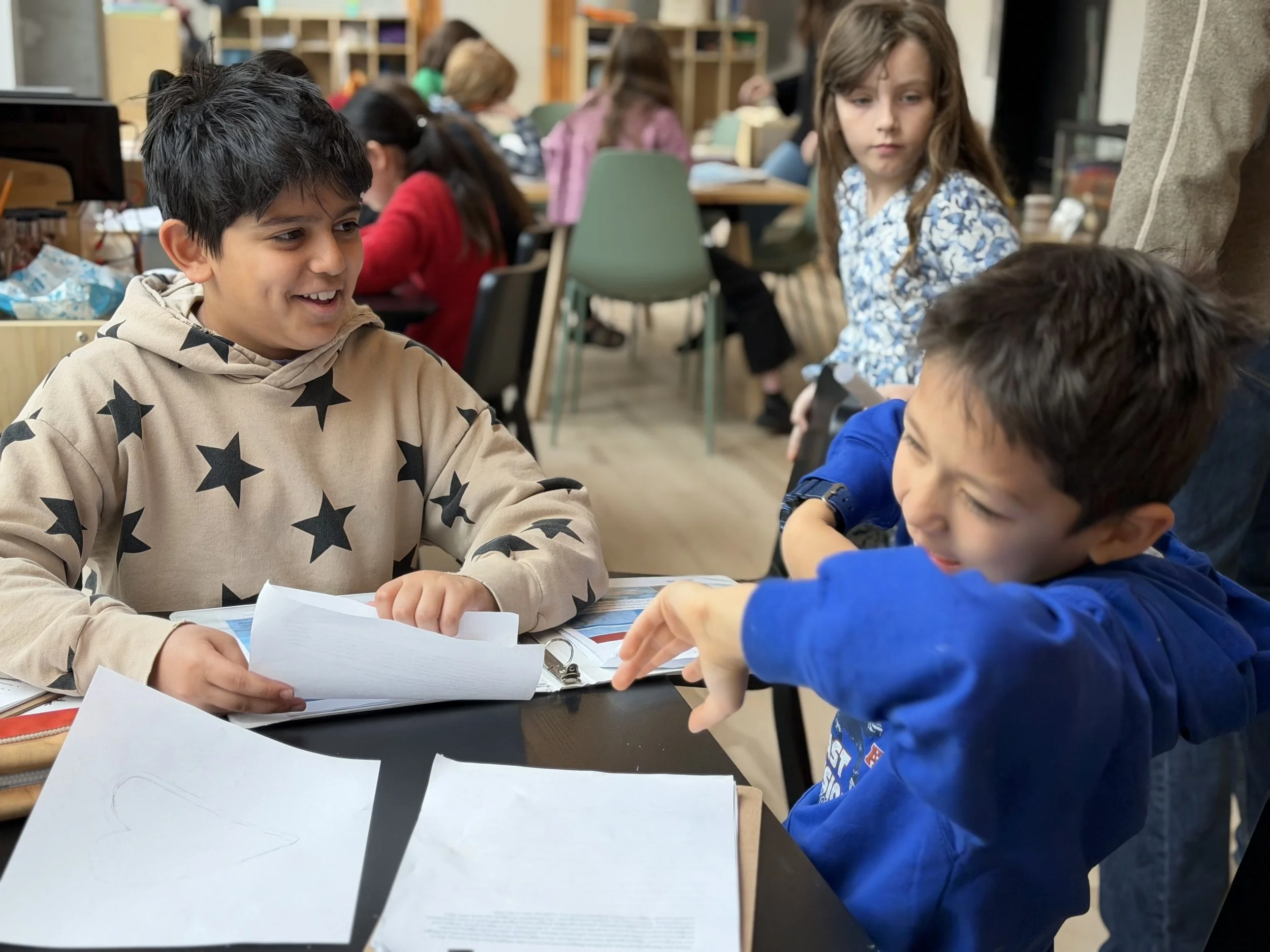
In the upper elementary classroom (4th-6th), content is not presented in “course subject” form; instead, ideas and concepts are explored across the breadth and to the depth demanded by the child. Thus, education is more about experiencing and relationships than dissemination of isolated facts from a pre-selected course of study. The senses are engaged whenever possible, aiding in the child’s natural capacity to learn.
In the natural order of development, the child is now more capable of understanding the abstract and visionary elements of life. Thus, in the upper elementary, the child is further transitioning from concrete to abstract appreciation of life. The educational process continues to follow the child through its inherent flexibility and adaptability. The teacher remains the facilitator or guide, assessing and then challenging the child’s natural curiosity.
Social development takes on a more prominent development at this age. Individual morals and values are further established, particularly within the framework of peers. The sense of self is expanded beyond personal experience. Abstract experiencing through literature, arts, etc. further develops and can modify the child’s sense of self. Decision-making skills and problem-solving skills are self-tested, and success is qualified as learning from both the positive and negative experiences of life.
Grade-Level Lessons
Children at this age want to know why the universe is as it is, how it came to be that way, and are ready to dig into a deeper layer of understanding. Lessons are meant to answer those questions, develop the critical-thinking habits to find their own answers, and to spark curiosity. Most lessons are taught in groups by grade level, and some have multi-age groupings. These follow a consistent weekly schedule and last approximately 30 minutes. Assignments are given that need to be completed by that lesson the next week. Teachers have lessons with all students all three years which helps build community, facilitate learning, and strengthen teaching teams.
Work Time/Assignments
When students are not in direct lessons, they have work time to choose what assignments to work on and plan their day. The consistent schedule allows children to learn how to manage their time, ask questions of teachers one-on-one, work with peers, and build strong executive functioning skills. Freedom of movement and choice are part of every day. This empowers children to take ownership of their education and build strong work habits.
Accommodating Different Skills/Interests
Our goal is to set children up for success, challenge them to build new skills and knowledge, and to help them build confidence and competency in many areas of study. There are accommodations made on assignments for children with an individual plan. There are learning extensions that are available for students particularly interested in a subject area. Those learning extension ideas might come from the teacher, from the materials on the shelves, or from the student. We strive to challenge and foster creativity and a continued love of learning.
COMPLETING THE CYCLE
Concrete to Abstract
Montessori materials and curriculum are the foundation of all Upper Elementary programs. Students work with hands-on materials to help integrate new concepts on a deep level, though they move to abstraction more quickly at this age. The (9-12) program also pulls in resources from many outside sources and introduces students to technology- typing, Google Suite, coding software and lego robotics, stop motion animation, and more.
The Great Works
This is a capstone program long portfolio project each 6th grader completes. They choose a topic, spend years researching, complete 10 great works that demonstrate that they have become experts on their topic. This Great Work culminates in a formal presentation to a large public audience where they present their topic and product in a 5-7 minute speech along with displaying their work. Some past topics: Sharks, Google, Alfred Hitchcock, Quantum Physics, Galapagos Islands, Neil deGrasse Tyson, History of Baseball, The Simpsons, and so much more. They work through this project with one-on-one editorial support from their advisor teacher.
Standardized Testing
All students ages 9–12 participate in one standardized assessment each year as part of our comprehensive approach to evaluation. This assessment serves as one additional data point for teachers, complementing ongoing observation, student work, and individualized progress tracking. Within the Montessori framework, standardized testing is approached thoughtfully and intentionally, without allowing it to drive instruction.
We use NWEA’s MAP Growth assessment, a nationally normed, research-based standardized test widely used by independent and public schools across the country. MAP Growth is adaptive, meaning it adjusts to each student’s level in real time, providing a more accurate picture of individual academic growth over time. Results help inform teachers’ understanding of student progress while honoring our commitment to developmentally appropriate, child-centered education.
UPPER ELEMENTARY TEAM
-
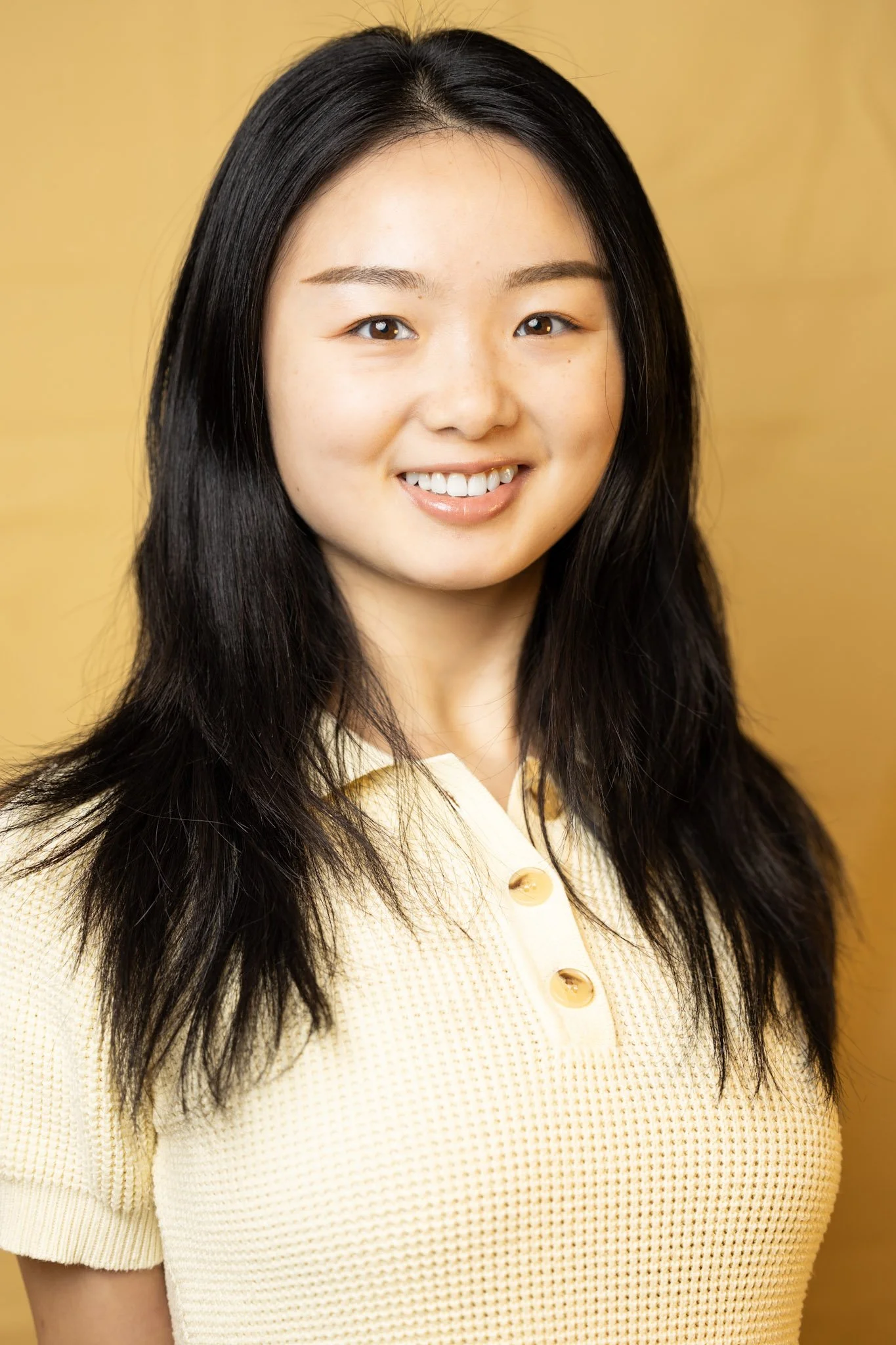
Celeste is a dedicated educator with over ten years of experience and a global educational background spanning Hong Kong, Seattle, and New York. She holds a Registered Teaching Certificate in Hong Kong, an AMS Early Childhood diploma, and an AMI Elementary diploma. In 2023, she was selected for the AMS Emerging Leadership Program and has presented at the AMS National Conference, sharing her research and innovative work. Guided by the belief that education is a precious gift, Celeste is deeply committed to creating nurturing, engaging learning environments. Outside the classroom, she enjoys watching movies, playing tennis, and biking around the city.
-
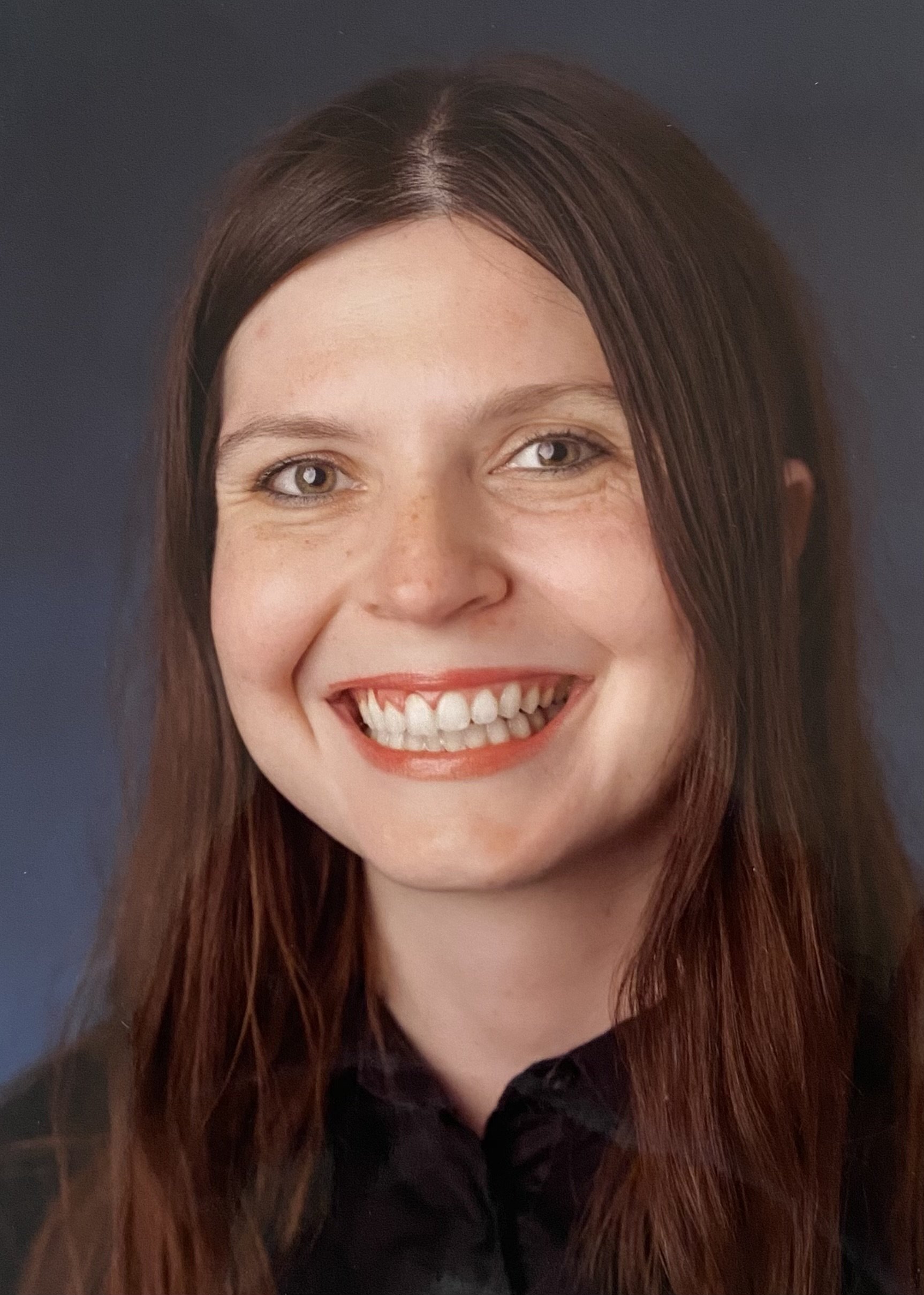
Jade received her Master of Arts degree in English and American Literature from NYU in 2023. She also attended NYU for her undergraduate studies, graduating summa cum laude and Phi Beta Kappa with a degree in English and minors in Psychology and Creative Writing. She has worked in elementary education for six years, both as a tutor with Huntington Learning Center and as an America Reads literacy specialist at P.S. 297 prior to joining the incredible team here at C’E. In her free time, Jade enjoys writing poetry and watching movies.
IB middle school
Montessori Meets International Baccalaureate Middle Years Program
Building purpose.
The Middle School Program blends our Montessori curriculum with the International Baccalaureate Middle Years Programme (IB MYP) to support students through a pivotal period of personal, social, physical, and intellectual growth. In this stage of self-discovery and the quest for social independence, when young adolescents are questioning their identity, values, and place in the world, the integration of Montessori philosophy with the rigor and reflection of the IB MYP offers both freedom and structure. The program nurtures curiosity, independence, and a genuine eagerness to learn, while guiding students to recognize their unique gifts and develop a sense of belonging within an increasingly complex, interconnected world.
A blue ribbon ending and a new beginning.
C'E Montessori is an International Baccalaureate World School authorized to offer the prestigious IB Middle Years Program (IB MYP), a rigorous framework designed to foster academic growth and personal development in middle school students.
Our Middle School Program seamlessly integrates the Montessori philosophy with the IB MYP, creating an environment that supports students through one of the most transformative stages of their lives. During these pivotal years, when students are exploring their identity and seeking their place in the world, C'E Montessori encourages them to embrace their curiosity, recognize their unique strengths, and develop a deep sense of belonging within an increasingly interconnected and complex global community.
The IB MYP offers a structure that challenges students to see the connections between academic subjects and the real world, preparing them to navigate an information-rich, rapidly changing society. In today's world, where access to information is ubiquitous, it's no longer enough to memorize facts for a test. At C'E Montessori, we believe in nurturing critical thinking: teaching students how to analyze problems, filter and synthesize information, and make well-informed, evidence-based decisions. More importantly, we empower them to take action with confidence and competence.
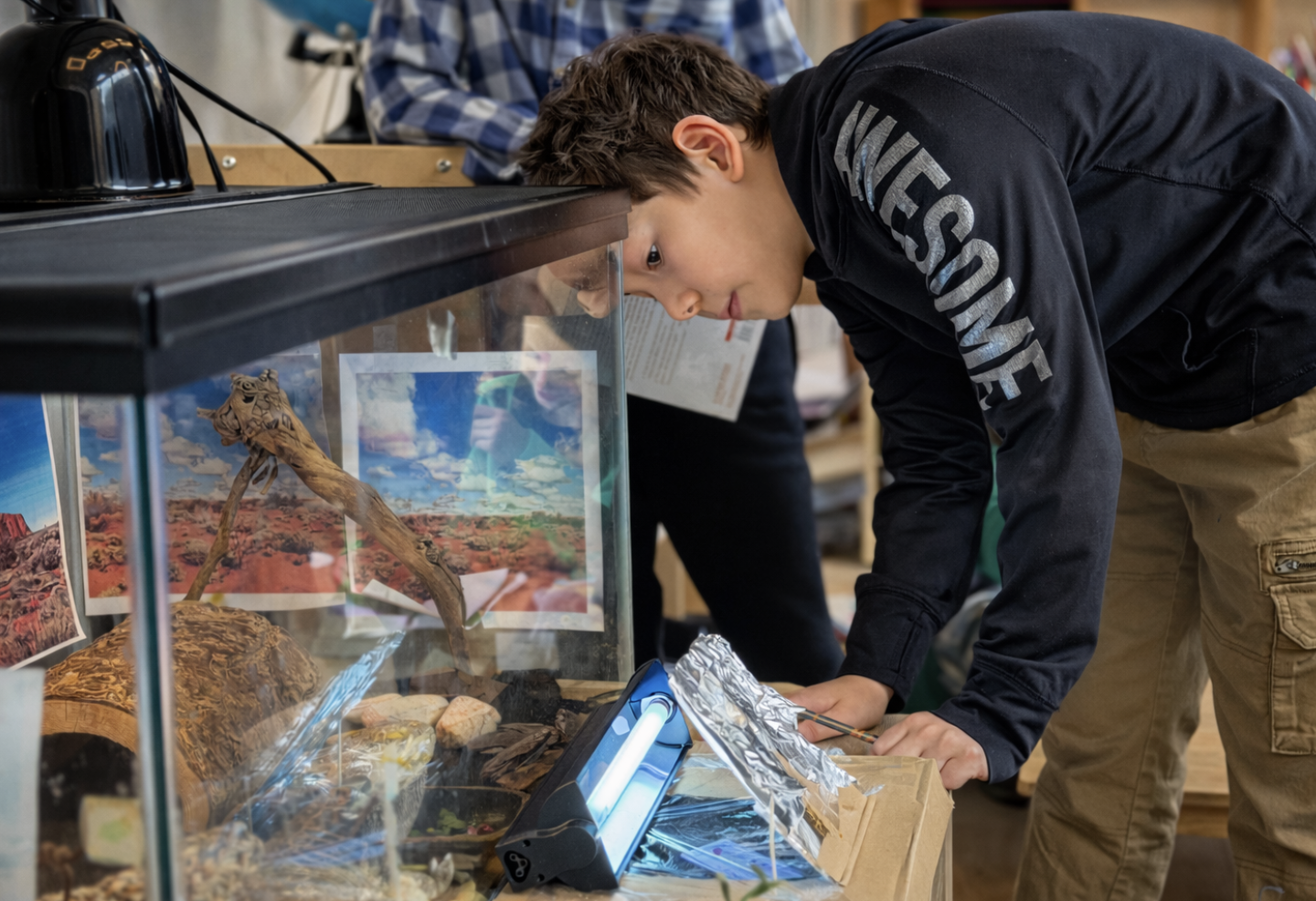
The Eight Subject Areas of the Middle Years Programme
the arts at c’e
ARTS FESTIVAL
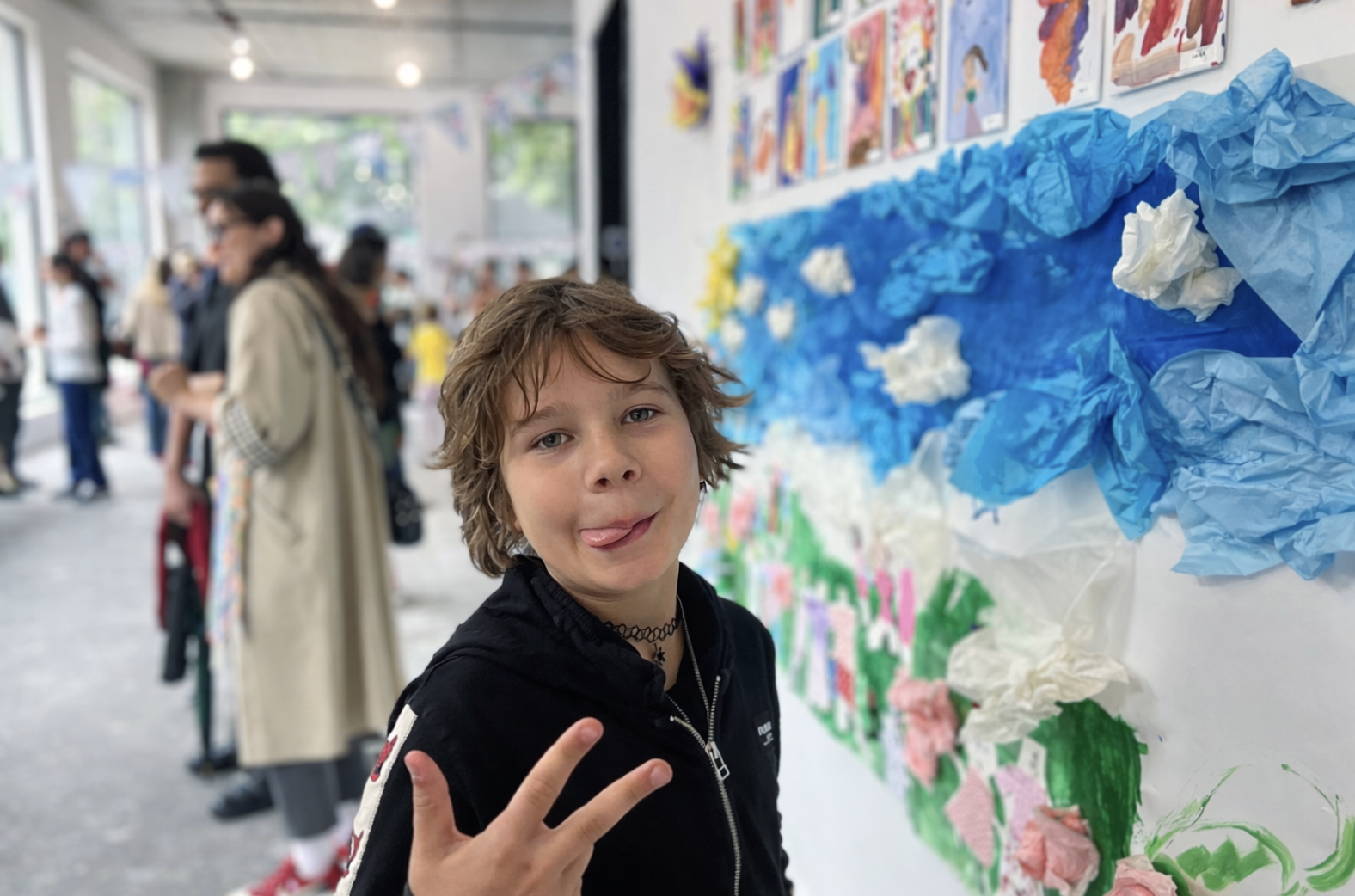
The C'E Annual Spring Arts Festival celebrates the talents and effort of children, parents, and staff in the school community. The Saturday morning event is a culmination of artwork created throughout the year and curated by teachers and an elementary student committee.
WINTER CONCERT
At the winter concert, students choose one of the five 'great lessons' from the elementary Montessori curriculum and bring it to life through music. Every child at school participates in this song, performance and dance collaboration presented to parents and guests each December. Children taking piano and ukulele lessons through school also have the opportunity to perform in front of their peers.

PRIMAVERA MUSICAL
Under the leadership of musical theater educator and artist Victoria Raigorodsky students take the stage each spring for a Spanish language performance. The musical is prepared throughout the year in a dedicated class led by Victoria and visiting artists who share their love for Latin-American and Spanish dance, children's theater and highlighting different Latin music.

-
Victoria is from Argentina and first came to C'E Montessori as a visiting teacher for a Spanish immersion experience through music. She is an artist first, a proud graduate from AMDA Integrated Conservatory in NYC after training at the Fundación Julio Bocca in Buenos Aires. She sings, dances and acts through each one of her days at C'E Montessori and outside of school in performances at Teatro Sea, LATEA and Cuchame theatre among others. She has been an important part of school for the past four years, and in 2020 decided to complete her Montessori training and take on a Lead Teacher role in one of our Primary classrooms. Victoria injects artistic flair into everything she does, nap-time included, but most notably plans, designs and runs the C'E Montessori Winter Concert. This yearly December event is the culmination of the fall semester and a great way for children at our school to take on different responsibilities and roles in developing voice and stage presence.