

Arts
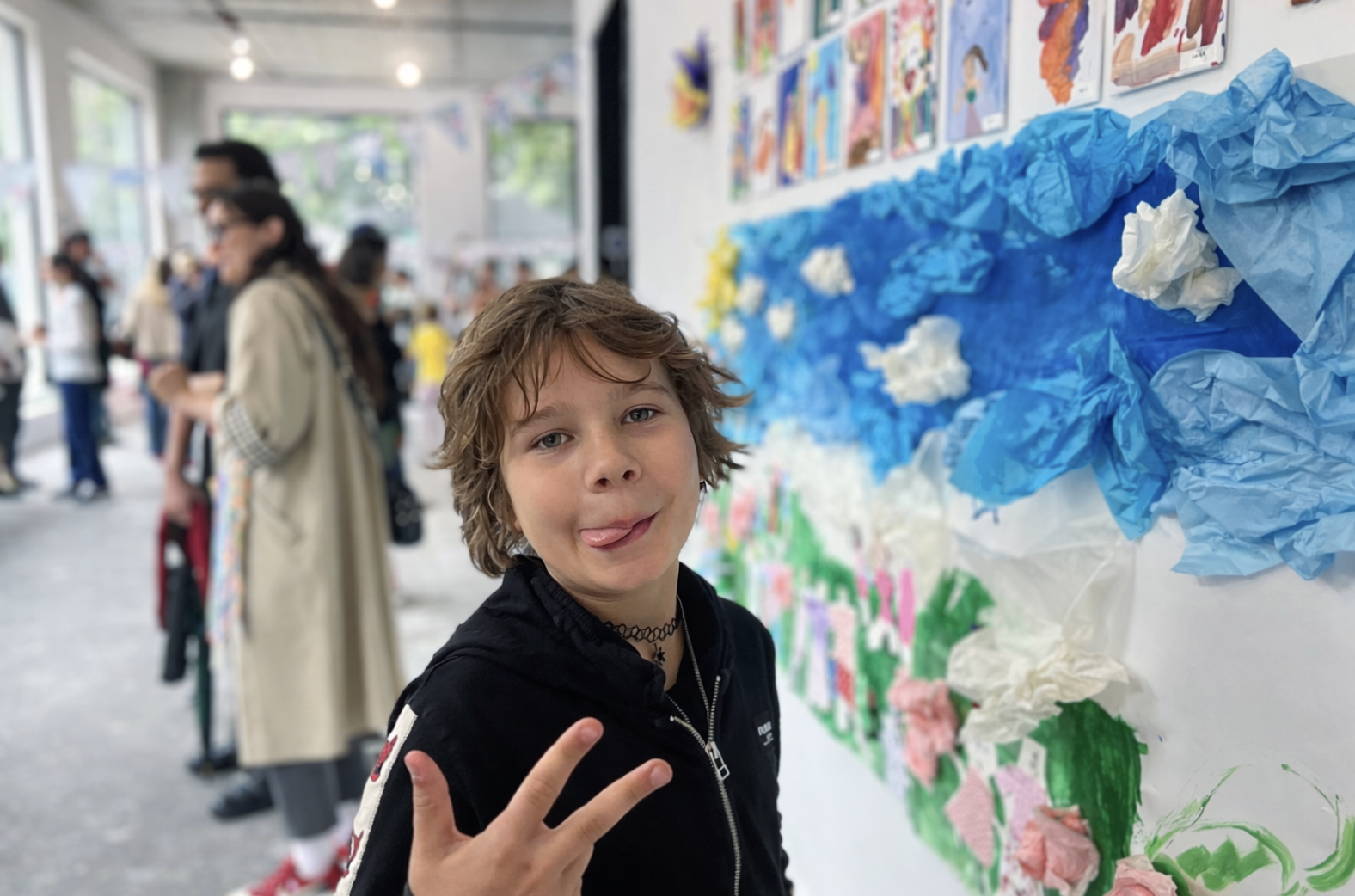
Students explore art as a reflection of identity, culture, and change. They investigate movements, genres, and artists while developing their own artistic intentions. Through sustained practice and reflection, students learn that art is not only about talent but about process, persistence, and growth.
In our IB Middle Years Programme Arts courses, students learn to think and work creatively while developing the discipline, courage, and skill of young artists. Rooted in Montessori principles and aligned with the IB framework, the arts are both a means of self-expression and a way of understanding culture, identity, and community.
The IB describes the arts as a space for investigating, developing, creating or performing, and evaluating artistic work Arts guide. At our school, students experience all four dimensions as active participants in visual and performing arts.
Arts as Inquiry and Identity
Students explore art as a reflection of identity, culture, and change. They investigate movements, genres, and artists while developing their own artistic intentions. Through sustained practice and reflection, students learn that art is not only about talent but about process, persistence, and growth.
Creativity is treated as a disciplined practice. Students experiment, take risks, revise their work, and document their thinking. They learn to give and receive feedback thoughtfully, understanding that collaboration strengthens artistic vision.
Performance and Production at Scale
Our arts program comes alive in two major school-wide events.
Each spring, students participate in a full-scale Spring Musical, a Broadway-level production involving more than 120 children. Students engage in dance, singing, acting, and backstage roles including audio, video, and production design. This experience develops artistic technique, teamwork, responsibility, and confidence in performance.
At the end of the year, our Culminating Arts Festival celebrates the creative work of all students. The festival includes a piano and ukulele recital, a short stop motion animation film festival, and presentations of culminating projects by sixth graders. This shared event honors both individual artistry and collective accomplishment.
The Great Works
Each unit culminates in a Great Work that integrates investigation, development, creation or performance, and evaluation. These works give students ownership of their artistic voice and responsibility for their craft. Examples include:
The Flow, a choreographed dance piece
The Song, an original or interpreted musical performance
The Piece, a finished visual artwork
Through these Great Works, students move from exploration to intentional creation, learning to articulate their artistic choices and reflect on their development.
Developing Creative Thinkers
By the end of the MYP Arts program, students understand that art is both personal and communal. They see themselves as creators capable of shaping meaning and communicating ideas through movement, sound, image, and performance. Equipped with discipline, imagination, and reflective practice, they are prepared to continue their artistic journey with confidence and purpose.

Physical and Health Education
By the end of the MYP Physical and Health Education program, students understand that physical wellbeing, mental focus, and social responsibility are interconnected. They see movement and health as lifelong practices that support learning, leadership, and meaningful participation in community life.
In our IB Middle Years Programme Physical and Health Education courses, students develop strength, awareness, discipline, and responsibility for their bodies and their communities. Rooted in Montessori principles and aligned with the IB framework, our program empowers students to value physical activity, make informed choices, and build balanced, healthy lives physical education guide.
Our approach includes three interconnected strands: Physical Education, Movement and Yoga, and Health.
Physical Education and Team Sports
In Physical Education, students participate in group sports that emphasize teamwork, leadership, strategy, and sportsmanship. Students learn to collaborate, communicate clearly, and compete with integrity. They practice setting goals, refining skills, and reflecting on performance.
Team sports become laboratories for leadership and character. Students learn to win with humility, lose with resilience, and support one another with respect.
Movement, Yoga, and Self Awareness
Our movement and yoga program strengthens focus, breathing, coordination, and mindfulness. Students develop awareness of posture, alignment, and physical balance while also cultivating emotional regulation and concentration.
Movement is not only physical training but a practice of self knowledge. Through breath work, meditation, and intentional flow, students learn to recognize their own patterns, manage stress, and care for their bodies with intention.
Health and Human Development
Health education addresses growth, adolescence, and the changes of puberty with clarity and respect. Students explore nutrition, physical development, and emotional wellbeing. Conversations include kindness in communities, grace and courtesy, and the responsibilities that come with growing independence.
Health is framed not simply as information but as agency. Students are encouraged to make thoughtful decisions that support long term wellbeing.
The Great Works
Each unit culminates in a Great Work that integrates knowledge, performance, and reflection. These works emphasize responsibility, intentionality, and application. Examples include:
The Flow, a movement or yoga sequence designed and performed with focus and control
The Game, including the design of rules, strategy, and structured play
The Menu, a nutrition project that connects health knowledge to practical planning
Through these Great Works, students demonstrate both physical competence and thoughtful understanding.
Developing Balanced Individuals
By the end of the MYP Physical and Health Education program, students understand that physical wellbeing, mental focus, and social responsibility are interconnected. They see movement and health as lifelong practices that support learning, leadership, and meaningful participation in community life.
Language Acquisition
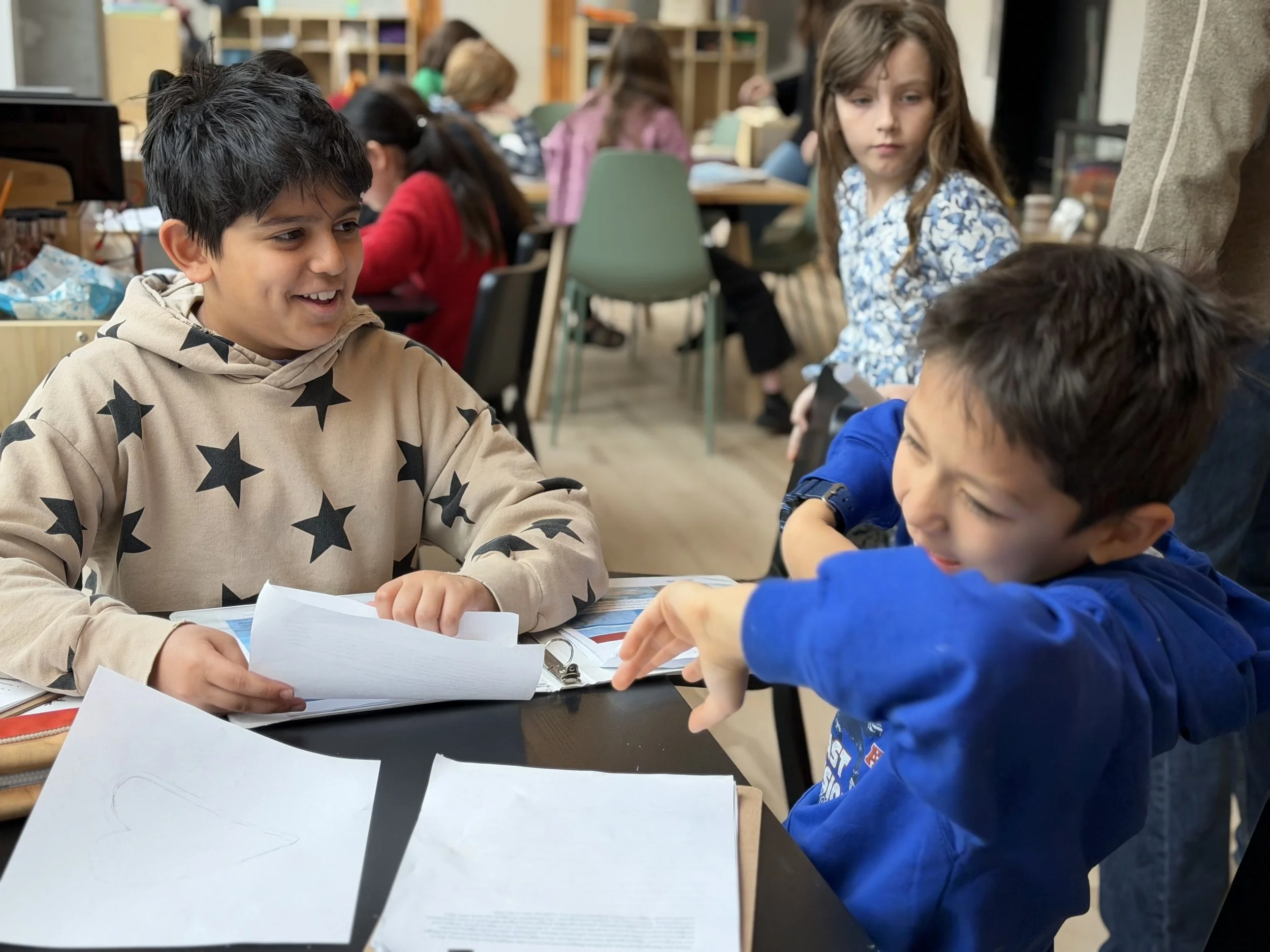
Spanish learning is lived, not isolated. As a dual language Spanish–English Montessori school, students learn languages through daily use, shared experiences, and meaningful communication. Spanish is taught as a subject and used as a language of instruction across the curriculum, allowing students to develop fluency, confidence, and cultural awareness in authentic contexts.
In our IB Middle Years Programme Language Acquisition courses, language is lived, not isolated. As a dual language Spanish–English Montessori school, students learn languages through daily use, shared experiences, and meaningful communication. Spanish is taught as a subject and used as a language of instruction across the curriculum, allowing students to develop fluency, confidence, and cultural awareness in authentic contexts.
Language as Daily Practice
Language learning happens throughout the day. Students engage with Spanish and English in academic work, collaborative projects, and community life. Lessons, discussions, and activities regularly take place in both languages, reinforcing comprehension and expression while normalizing bilingual thinking. Language becomes a tool for learning rather than an object of study alone.
Building Voice and Confidence
Our focus is on helping students find and trust their voice in each language. Students are encouraged to take risks, speak often, and communicate even when their language is still developing. Accuracy grows alongside confidence through practice, feedback, and reflection. The goal is clear communication, self-expression, and the ability to engage meaningfully with others.
Culture and Community
Language acquisition is inseparable from culture. Students participate in cultural moments that reflect the languages they are learning, including school traditions, performances, celebrations, and community events. Many of these shared experiences, including events to which families are invited, take place in Spanish or English, reinforcing language learning as a collective and joyful practice.
Language Across the Curriculum
Spanish is not confined to language class. Students use Spanish as a working language in other subjects, strengthening vocabulary, comprehension, and fluency in real academic contexts. This interdisciplinary approach supports deeper understanding while reinforcing the practical power of bilingualism.
The Great Works
As in Language and Literature, each unit culminates in a Great Work that challenges students to apply their language skills in increasingly complex ways. These projects emphasize clarity, structure, and audience awareness in the target language. Examples include:
The Great Story, developing narrative voice and expression
The Speech, focused on oral communication and presence
The Essay, building academic language and structure
The Proposal, combining research, persuasion, and presentation
Through these works, students learn to communicate with intention and confidence in more than one language.
Preparing Global Communicators
By the end of the MYP Language Acquisition program, students are comfortable navigating multiple languages and cultural contexts. They see language as a bridge to connection, understanding, and action. This foundation prepares them for advanced study, meaningful participation in a multilingual world, and a lifelong appreciation for communication in all its forms.
Individuals and Societies
By the end of the MYP Individuals and Societies program, students understand that societies are created and changed by people. They see their own identities, choices, and responsibilities as part of the ongoing human story. Equipped with knowledge, empathy, and agency, students are prepared to engage thoughtfully and courageously with the world.
In our IB Middle Years Programme Individuals and Societies courses, students study humanity through the lens of lived experience, historical context, and social responsibility. Building on the Upper Elementary Montessori focus on fundamental human needs, the program deepens students’ understanding of how societies form, how power operates, and how people experience the world differently across time and place.
From Human Needs to Human Systems
Students begin with essential questions that anchor Montessori learning: What do people need to survive, belong, and thrive? From there, they examine how those needs give rise to social, political, economic, and cultural systems. History, geography, civics, and economics are explored as interconnected stories shaped by human choices, values, and conditions.
Understanding Perspectives and Power
Inquiry in Individuals and Societies emphasizes perspective. Students learn to analyze events and systems through multiple viewpoints, paying attention to whose voices are centered and whose have been excluded. As an anti-racist, gender-inclusive, and globally minded school, we intentionally examine identity, equity, and representation, helping students develop empathy, critical awareness, and ethical responsibility.
Research, Reflection, and Voice
Students engage deeply with research as a tool for understanding the world and their place within it. Through portfolios and personal projects, they gather evidence, ask complex questions, and reflect on how their own experiences and values connect to broader human stories. Learning is cumulative and personal, encouraging students to see themselves as active participants in society rather than passive observers.
Montessori Model United Nations
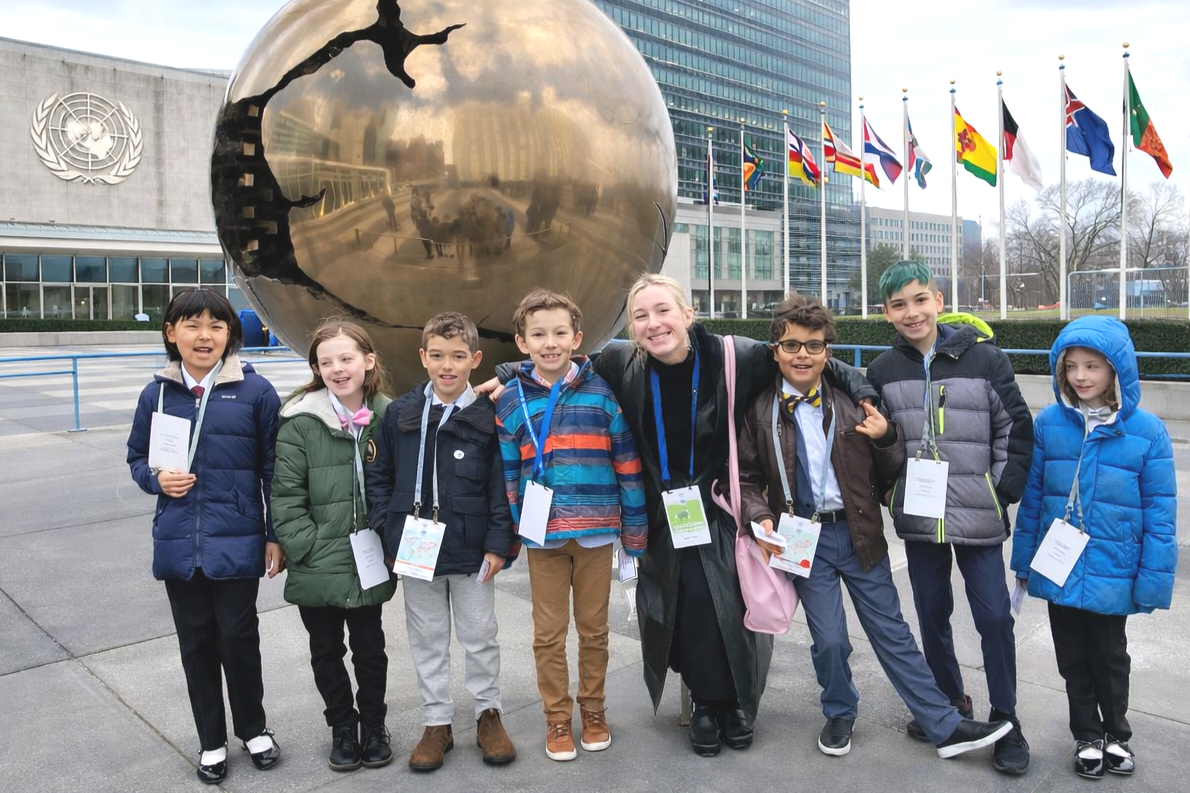
Each year, students participate in Montessori Model United Nations, a four-day international conference held in New York City that brings together thousands of Montessori students from around the world. Through this experience, students represent countries, debate global issues, collaborate across cultures, and practice diplomacy, research, and public speaking in an authentic global forum.
The Great Works
Each unit culminates in a Great Work that integrates research, analysis, communication, and action. These projects are designed to imprint each student’s voice and perspective into their understanding of human societies. Examples include:
Research Papers, grounded in evidence and historical context
Research Presentations, focused on clarity and audience engagement
The Speech, developing persuasive and ethical argument
The Proposal, addressing real social challenges
The Service Project, connecting learning to meaningful action
As students advance, these Great Works require increasing independence, depth, and accountability.
Preparing Engaged Global Citizens
By the end of the MYP Individuals and Societies program, students understand that societies are created and changed by people. They see their own identities, choices, and responsibilities as part of the ongoing human story. Equipped with knowledge, empathy, and agency, students are prepared to engage thoughtfully and courageously with the world.
Language & Literature
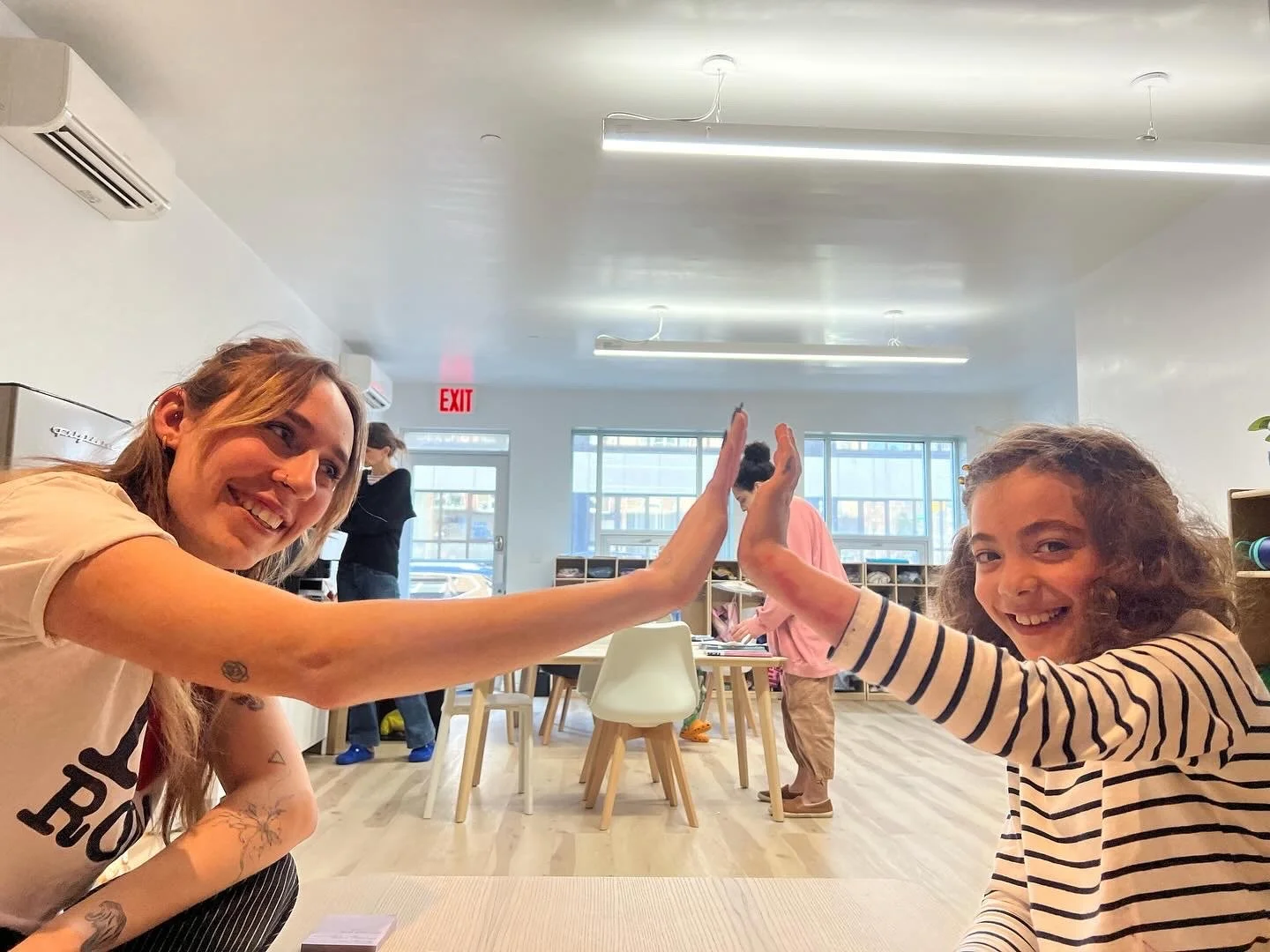
Students learn that reading, writing, speaking, and listening are not isolated skills but connected acts of thinking, creativity, and expression. Rooted in Montessori principles and aligned with the IB framework, our program emphasizes experimentation, collaboration, and continual performance in language.
In our IB Middle Years Programme Language and Literature courses, language is a living practice. Students learn that reading, writing, speaking, and listening are not isolated skills but connected acts of thinking, creativity, and expression. Rooted in Montessori principles and aligned with the IB framework, our program emphasizes experimentation, collaboration, and continual performance in language.
Language as Exploration
Students are encouraged to take risks in their writing. They experiment with form, voice, and structure as they learn how language works and how it can be shaped to serve different purposes. Drafting is treated as a process of discovery, where ideas evolve through reflection, feedback, and revision. Mistakes are not failures but essential steps in developing clarity, confidence, and originality.
Reading with Intention
Reading in our program is active and inquiry driven. Students engage with literature, nonfiction, speeches, and essays to examine how meaning is constructed and how language influences thought and action. Through close reading and discussion, students strengthen comprehension while learning to interpret, question, and respond thoughtfully to complex texts.
Writing as a Collaborative Practice
Writing is not a solitary activity. Students regularly share drafts, participate in peer editing, and learn how to give and receive constructive feedback. This collaborative approach mirrors real professional writing environments and helps students understand writing as a social and iterative process. Editing becomes a shared responsibility, sharpening attention to precision, tone, and audience.
Language as Performance
Language is practiced out loud as well as on the page. Students present, debate, read aloud, and perform their work for authentic audiences. Through speeches, discussions, and presentations, they develop confidence, presence, and the ability to adapt their language in real time. Communication becomes an active skill, practiced daily.
The Great Works
Each unit culminates in a major project known as a Great Work. These works challenge students to integrate reading, writing, editing, and performance into increasingly complex forms of expression. Examples include:
The Great Story, focused on narrative craft and structure
The Speech, designed to persuade and engage an audience
The Essay, centered on analysis, argument, and evidence
The Proposal, which combines research, writing, and presentation to address real needs
As students advance through the program, these Great Works demand greater independence, sophistication, and responsibility for their own learning.
Preparing Thoughtful Communicators
By the end of the MYP Language and Literature program, students see themselves as capable communicators and thinkers. They understand language as a tool for exploration, collaboration, and action. These habits of mind prepare them for advanced academic work, civic engagement, and meaningful participation in the world.
Mathematics
In our IB Middle Years Programme Mathematics courses, mathematics is an active, creative discipline. Students experience math as a way of thinking, modeling, and making sense of the world rather than as a set of isolated procedures. Grounded in Montessori principles and aligned with the IB framework, our program emphasizes exploration, collaboration, and real-world application.
In our IB Middle Years Programme Mathematics courses, mathematics is an active, creative discipline. Students experience math as a way of thinking, modeling, and making sense of the world rather than as a set of isolated procedures. Grounded in Montessori principles and aligned with the IB framework, our program emphasizes exploration, collaboration, and real-world application.
Mathematics as Inquiry
Students learn mathematics through investigation and discovery. They are encouraged to ask questions, recognize patterns, test ideas, and revise their thinking. Concepts are introduced through meaningful problems that invite experimentation and multiple approaches. This inquiry driven environment builds confidence, persistence, and intellectual independence.
Learning Through Models and Materials
Mathematics is made concrete before it becomes abstract. Students work with diagrams, physical models, graphs, and representations to explore number, algebra, geometry, statistics, and probability. By building and manipulating models, students develop a deep understanding of structure, scale, and relationships that supports long-term mathematical thinking.
Collaboration and Mathematical Communication
Mathematics is a social practice. Students regularly work together to solve problems, compare strategies, and explain their reasoning. They learn to communicate mathematical ideas clearly using appropriate language, symbols, and representations. Sharing thinking aloud and in writing strengthens both understanding and precision.
Mathematics as Performance
Students are expected to perform their understanding through presentation, defense of ideas, and real-time problem solving. Whether explaining a solution at the board, presenting a model, or responding to an unfamiliar challenge, students practice using mathematics fluently and confidently in front of others.
The Great Works
Each unit culminates in a substantial project known as a Great Work. These projects require students to integrate reasoning, creativity, accuracy, and reflection while applying mathematics to authentic contexts. Examples include:
Creating a Model, where students design and test mathematical representations
Financial Projecting, focused on budgeting, forecasting, and decision making
Floor Mapping, involving scale, measurement, and spatial reasoning
Architecture, where geometry, proportion, and structural logic come together
As students progress, these Great Works become more complex, requiring greater independence, abstraction, and accountability.
Creative Problem Solving
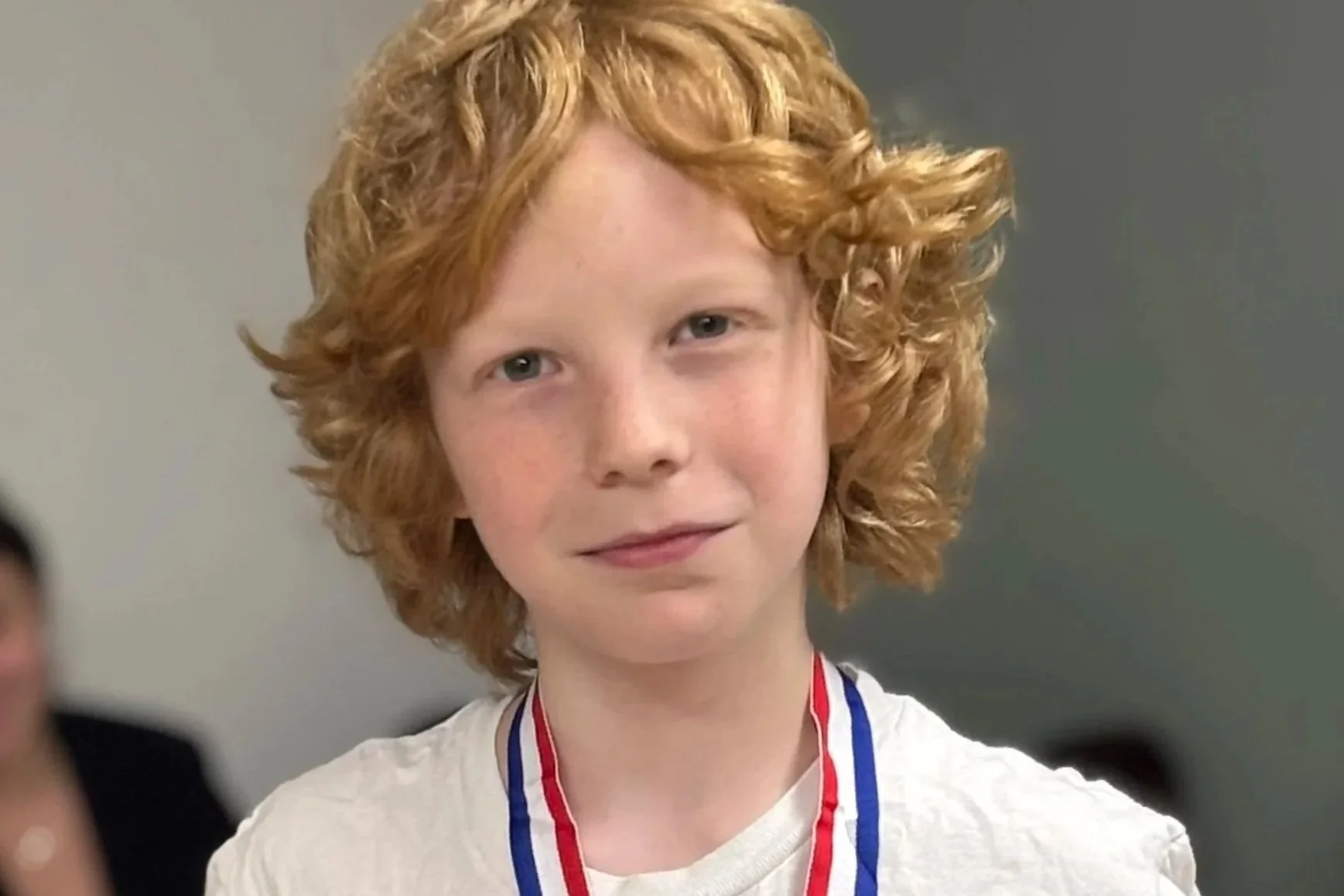
Students are encouraged to see mathematics as playful as well as powerful. Participation in the Math Kangaroo competition offers an additional opportunity to engage with creative, non-routine problems that reward flexible thinking, perseverance, and imagination rather than memorization.
Developing Confident Mathematical Thinkers
By the end of the MYP Mathematics program, students understand mathematics as a universal language and a practical tool for inquiry and action. They are prepared to approach complex problems with curiosity, clarity, and confidence, ready for the challenges of advanced study and real-world application.
Technology
Technology is a way of thinking and solving problems. Students learn that technology is not limited to coding or devices, but includes designing systems, testing ideas, and creating solutions that respond to real needs. Rooted in Montessori principles and aligned with the IB framework, our program emphasizes creativity, iteration, collaboration, and purposeful design.
In our IB Middle Years Programme Technology courses, technology is understood as a way of thinking and solving problems. Students learn that technology is not limited to coding or devices, but includes designing systems, testing ideas, and creating solutions that respond to real needs. Rooted in Montessori principles and aligned with the IB framework, our program emphasizes creativity, iteration, collaboration, and purposeful design.
Technology as Problem Solving
Students approach technology through challenges that require planning, experimentation, and reflection. They learn to define problems clearly, break them into manageable parts, and test multiple solutions. Failure is treated as feedback, and revision is an expected and valued part of the process. This mindset prepares students to approach unfamiliar challenges with confidence and flexibility.
Learning Through Design and Making
Our Technology Lab is a space for hands-on exploration. Students design, build, code, and refine their work using both physical and digital tools. Projects may involve robotics, programming, modeling, or systems design, always grounded in thoughtful problem solving rather than isolated technical skills.
Coding and Computational Thinking
Students learn to code as a language for thinking. They design games and programs using block-based platforms as well as text-based languages such as Python and JavaScript. Emphasis is placed on logic, structure, debugging, and clarity of expression. Coding becomes a tool for creativity, communication, and innovation.
Robotics and Engineering Challenges
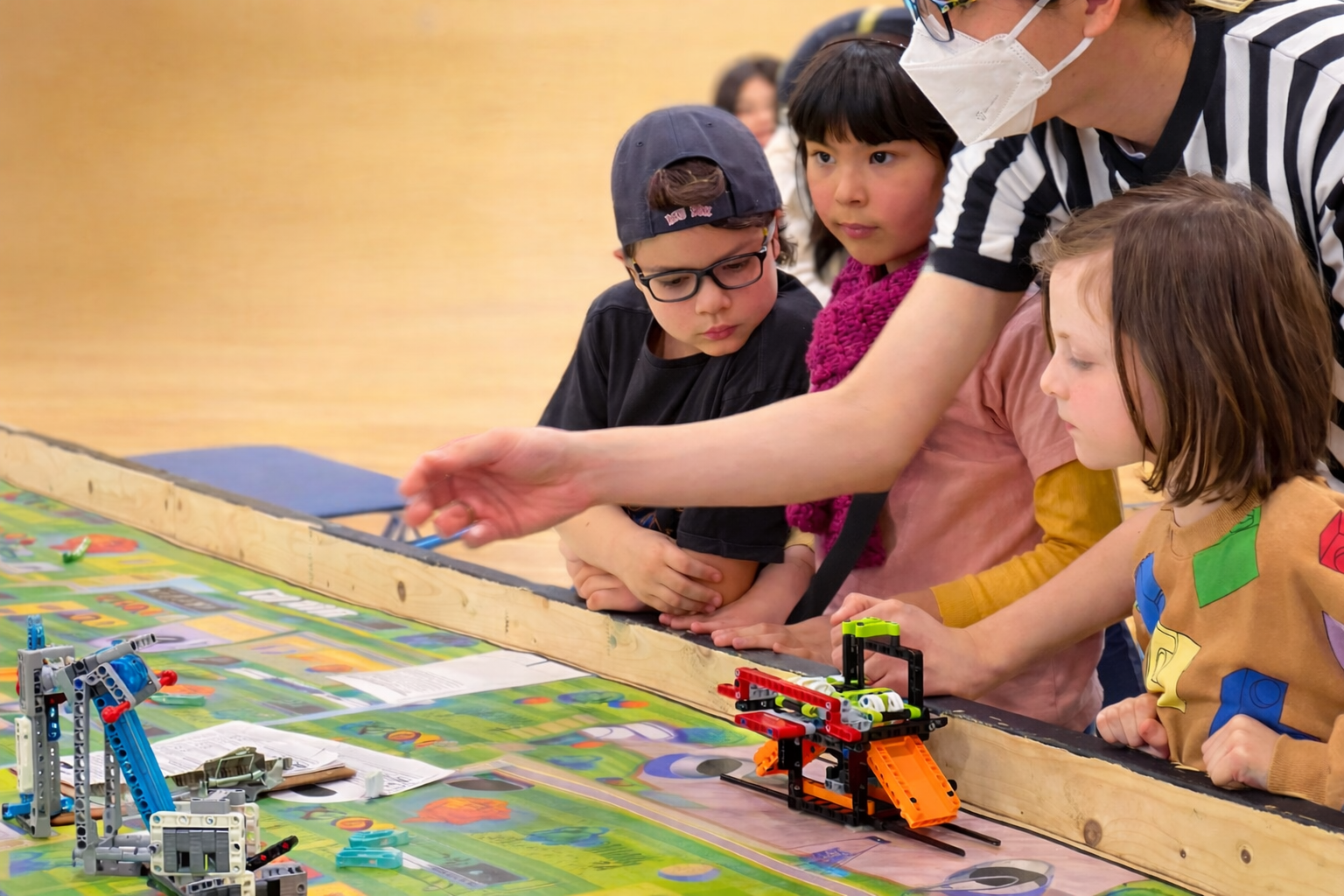
Students participate in FIRST LEGO League robotics through our Technology Lab, applying engineering principles, teamwork, and strategic thinking. Preparing for and competing in the NYC FIRST LEGO League Challenge gives students the opportunity to solve complex problems under real constraints while collaborating, testing, and iterating as a team.
Technology and Systems Thinking
Technology also includes understanding systems beyond machines. Students build business concepts, create projection models, and explore how data, design, and decision making interact. These experiences help students see technology as something that shapes and responds to human needs, economies, and communities.
The Great Works
Each unit culminates in a Great Work that integrates technical skills, creativity, and reflection. These projects challenge students to take ownership of their learning while producing meaningful outcomes. Examples include:
Designing a Game, combining storytelling, logic, and user experience
Designing a Program, focused on functionality, structure, and clarity
Building a Projection Model, integrating mathematics, planning, and real-world constraints
As students progress, these Great Works increase in complexity and independence, reflecting growing mastery and confidence.
Preparing Innovative Thinkers
By the end of the MYP Technology program, students see themselves as capable designers and problem solvers. They understand technology as a creative and ethical force and are prepared to use it thoughtfully, collaboratively, and responsibly in academic settings and beyond.
Sciences
By the end of the MYP Sciences program, students understand science as a dynamic process of discovery. They see themselves as capable investigators who can ask meaningful questions, evaluate evidence, and connect scientific knowledge to the wider universe and the living world. This foundation prepares students for advanced study and for thoughtful engagement with the scientific challenges of the future.
In our IB Middle Years Programme Sciences courses, students explore the natural world through story, observation, and inquiry. Rooted in Montessori tradition and aligned with the IB framework, science begins with the great narratives that connect all knowledge. Students encounter science as a human endeavor shaped by curiosity, evidence, and imagination.
The Great Stories of Science
Scientific study is launched through two foundational Montessori stories. Physical sciences begin with the story of the coming of the universe, inviting students to explore matter, energy, forces, and the laws that govern the cosmos. Life sciences begin with the story of the coming of life, guiding students into the study of biology, ecosystems, evolution, and interdependence. These narratives provide coherence and meaning, helping students see science as part of a larger human understanding of the world.
Science as Inquiry and Experimentation
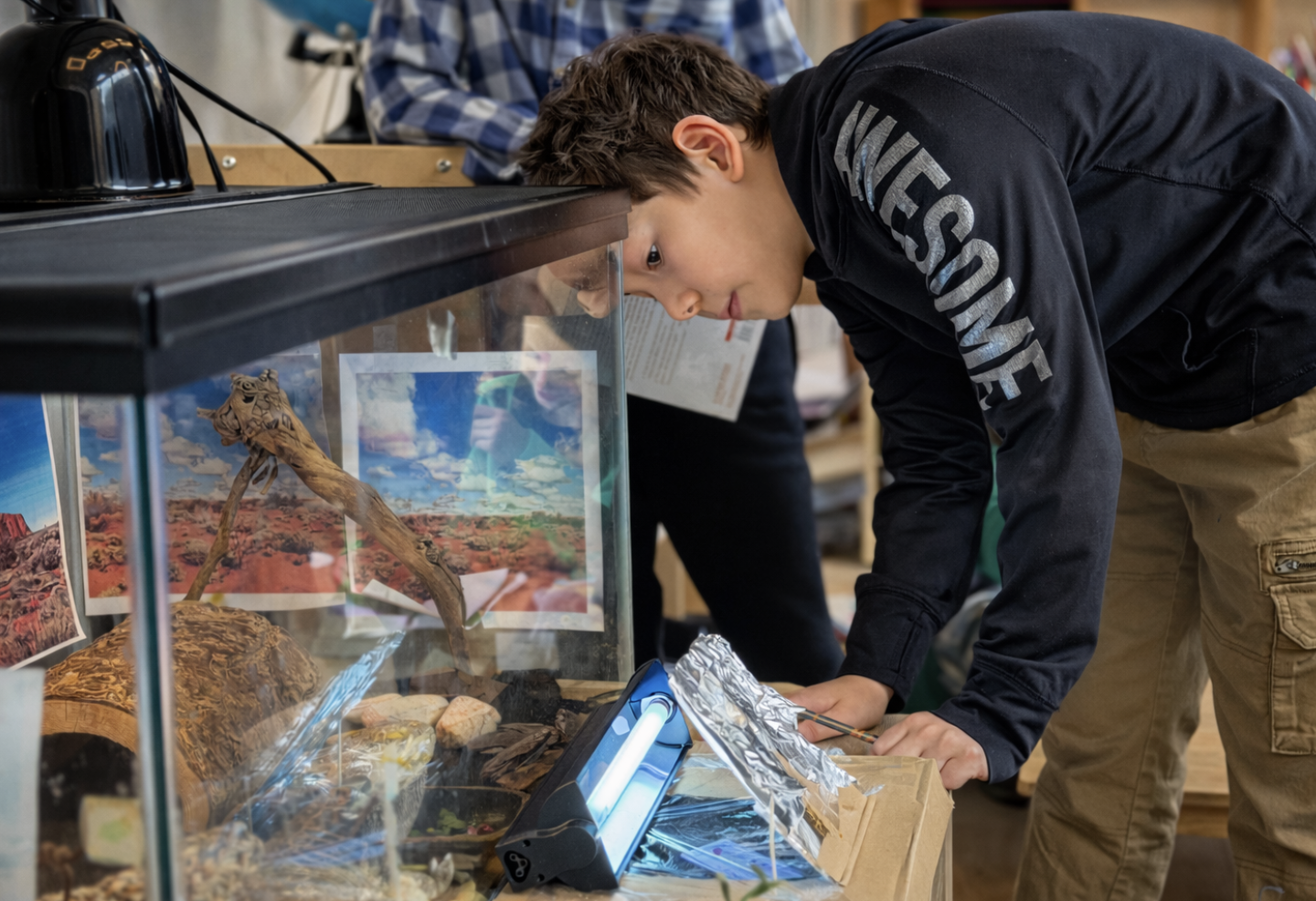
Students learn science by doing science. They ask questions, design investigations, collect data, and revise their thinking based on evidence. Curiosity drives learning, and uncertainty is welcomed as part of the process. Students are encouraged to think like scientists by testing ideas, observing carefully, and drawing conclusions grounded in reasoning rather than assumption.
Observation, Modeling, and Evidence
Scientific understanding develops through multiple forms of expression. Students work with diagrams, physical models, simulations, and data representations to make sense of complex systems. Modeling allows students to visualize processes that are too large, too small, or too slow to observe directly, strengthening conceptual understanding and scientific reasoning.
Collaboration and Scientific Communication
Science is a collaborative discipline. Students work together to plan experiments, share observations, and analyze results. They practice communicating scientific ideas clearly through writing, presentation, and discussion, learning to support claims with evidence and to listen thoughtfully to the ideas of others.
The Great Works
Each unit culminates in a Great Work that allows students to demonstrate understanding through authentic scientific practice. These works emphasize inquiry, clarity, and intellectual ownership. Examples include:
Research Papers, grounded in scientific literature and evidence
Research Presentations, focused on explanation and communication
The Experiment, designed, conducted, and analyzed by students
The Model, representing scientific systems or processes
As students progress, these Great Works become more complex and independent, reflecting deeper scientific understanding and confidence.
Developing Scientific Thinkers
By the end of the MYP Sciences program, students understand science as a dynamic process of discovery. They see themselves as capable investigators who can ask meaningful questions, evaluate evidence, and connect scientific knowledge to the wider universe and the living world. This foundation prepares students for advanced study and for thoughtful engagement with the scientific challenges of the future.